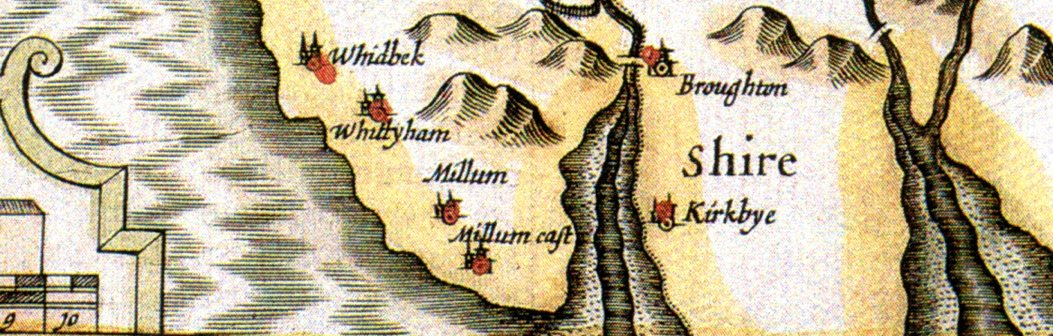
It is quite possible that few visitors to the Lake District today, admiring the impressive and beautiful rural landscape, appreciate quite how ‘industrial’ the area was in previous centuries, with quarries, mines and mills, as well as farms, providing work and income for both local inhabitants and men who moved to the area from as far afield as Cornwall and Ireland.
Working in these industries was usually hard and could be dangerous, with many accidents and deaths recorded. One of the most notorious workplaces was the Blackbeck Gunpowder Mill, where production started in 1862. It was located near the village of Bouth on the Furness peninsula, which was in Lancashire until 1974, but is now in Cumbria.
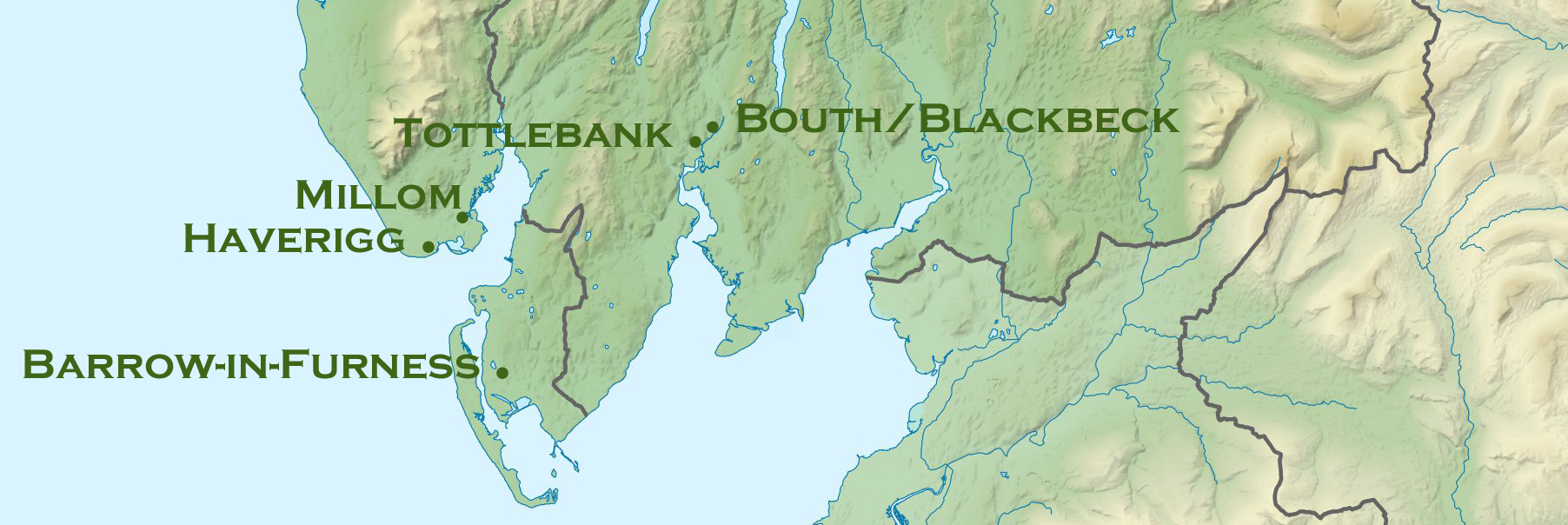
Several members of my family worked at the Blackbeck mill and in 1906 an explosion there killed the first husband of my Great Aunt Alice.
Walter Bell was born in 1883, the son of Stephen Bell, a mason/waller and his wife Mary (née Taylor). At the time of the 1891 census Walter was only seven years old and a ‘scholar’ but four of his sisters, aged 14-21, were all employed as ‘powder packers’, almost certainly at Blackbeck, which was a major employer in the area. By the time of the 1901 census Walter, then aged 17, was working as a ‘gunpowder labourer’. His future wife, Alice Taylor Park, was only 13 in 1901 and at school, but one of her sisters, Emily, aged 24, was a ‘Cartridge wrapper, Gunpowder works’ and their father (my Great Grandfather) Edward Park was described as ‘Wood Boxmaker, Gunpowder works’. Edward was to be employed at Blackbeck until the mill closed in 1928.

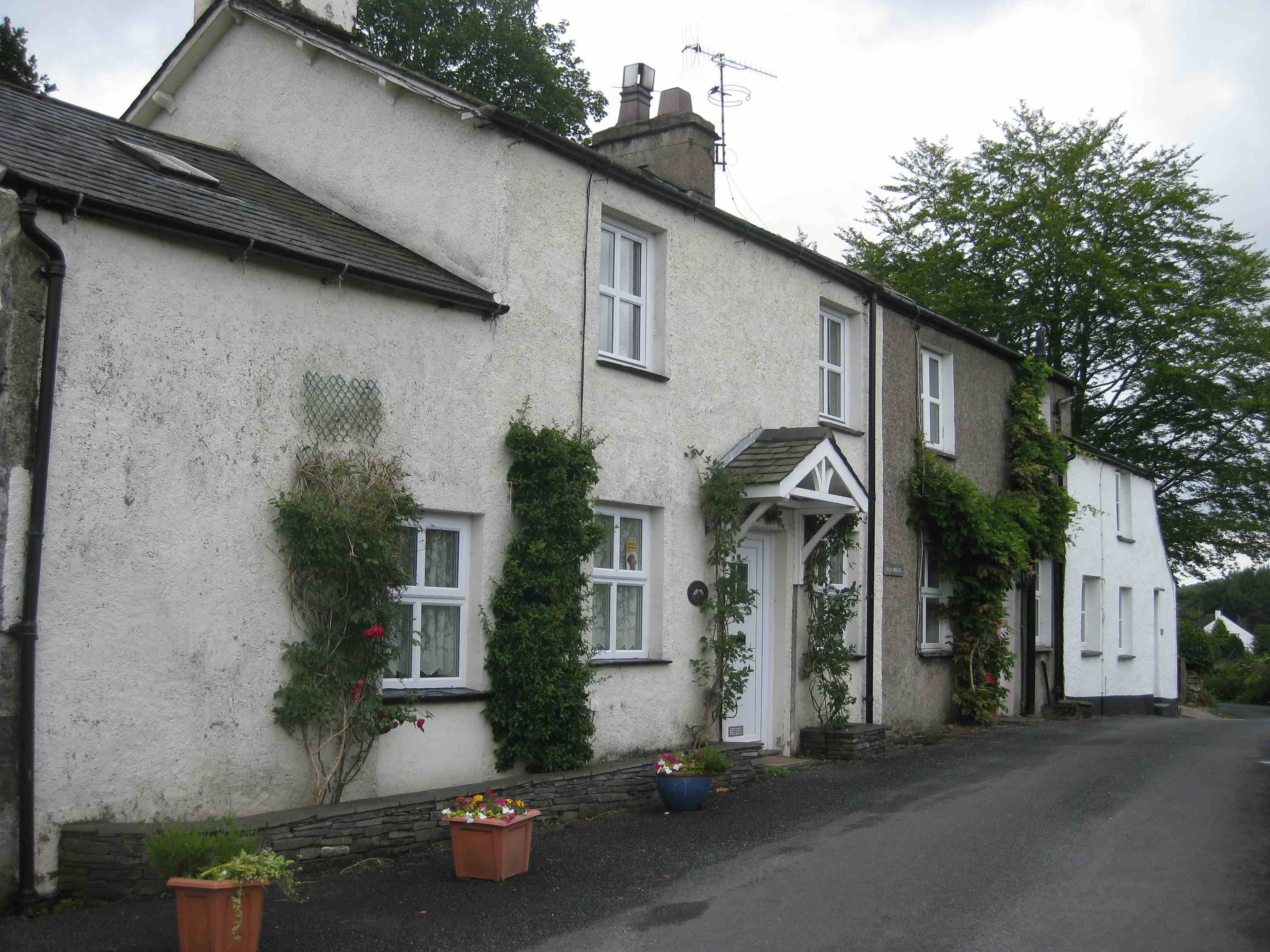
Walter Bell and Alice Taylor Park were married in the third quarter of 1904 and their only child, Edward Stephen Bell, was born on 27 July 1905. On 30 April 1906, Walter set off for work from the family’s home in Bouth. According to the North Lonsdale Herald of 5 May 1906:
‘Bell, it appears, was the owner of a very intelligent dog. On the morning of the sad occurrence the deceased was playing with the dog and when he got up from his chair to go to work, the dog held him by the trousers with its teeth, dragging him back towards the chair. On two occasions after this the dog repeated the performance and it is stated that this strange behaviour on the part of the dog led Mrs Bell to remark that it did not appear to want her husband to go to work.’
‘About 10.50 a.m. the countryside resounded with the report of a deafening explosion … the corning house was a complete wreck and the two occupants lay mutilated and lifeless. The two men killed are John Woodburn, aged 51, who was in charge of the corning house, and Walter Bell, aged 22. Both were married men. … The explosion is rendered additionally sad by the fact that Bell is practically a newly married man. … the two poor men were hurled over a wall about 30 feet high. Bell, it is thought, caught the top of the wall when falling, and his body was shockingly mutilated in consequence. Woodburn’s body was picked up about 40 yards from the wrecked building in which he had been working, and Bell’s was about 25 yards away. The clothing of the man Bell was on fire when his body was found, and he is said to have been breathing slightly. Woodburn was quite dead. … Bell had only been married a little over 12 months, and he leaves a widow and one child.’
‘The bodies of the two deceased workmen were interred on Wednesday after the funeral of John Woodburn taking place at Colton Parish Church, and that of Walter Bell at Tottlebank Baptist Chapel, the former being fixed for 2 o’clock and the latter for 3.30 pm. The works were closed, and consequently the whole of the workmen, together with many from the surrounding villages, were present. The services were very impressive, and sympathy to the bereaved ones was manifested on all sides.’
Walter’s widow, my Great Aunt Alice, who was only 19 when she was widowed, married Arthur Atkinson in 1909 and they had four children. The 1911 census shows that Arthur was also then working at the gunpowder mill, though by the time of the 1939 Register he was driving an electric crane at the shipyard in Barrow-in-Furness. Alice died in 1950 aged 63.
I was unable to find a headstone for Walter Bell in the churchyard of Tottlebank Baptist Chapel, where Walter’s funeral took place. The Church is a Grade II Iisted building which dates back to 1697 (according to their website) or c.1750 (according to Historic England). From the outside it is an unprepossessing roughcast single storey building but it is in a lovely, peaceful place, with views over the surrounding countryside.


The site of the Blackbeck Gunpowder Mill, also in a beautiful location, is now a caravan park with nothing to show that it was once a busy, noisy and dangerous place where many worked, and where, in the course of its existence, 66 men, including my Great Uncle, Walter Bell, died.
 Patricia's Family History
